Key Public Health Theories
Individual-Level Theories: Understanding Personal Health Decisions
Individual-level theories focus on the cognitive, emotional, and motivational factors that drive personal health decisions. The Health Belief Model examines how perceptions of disease threat and treatment efficacy influence whether someone takes preventive action. A patient who perceives low susceptibility to heart disease and high barriers to exercise is unlikely to begin a fitness regimen, regardless of how much health information they receive.
The Theory of Planned Behavior extends this analysis by incorporating social influences and perceived behavioral control. It posits that a person's intention to perform a health behavior is shaped by their attitude toward the behavior, the social pressure they feel to perform or avoid it, and their confidence in their ability to execute it. All three components must align for intention to translate into action.
These individual-level frameworks are particularly valuable for designing patient education materials, counseling strategies, and behavior-change interventions. By identifying which psychological constructs are most relevant for a given population and behavior, practitioners can tailor their approaches for maximum impact rather than relying on generic health messaging that may miss the mark.
Interpersonal Theories: The Social Dimensions of Health
Health behaviors do not occur in a vacuum. Interpersonal theories recognize that relationships, social roles, and group dynamics profoundly shape individual health choices. Social Cognitive Theory emphasizes observational learning, modeling, and reciprocal determinism—the idea that personal factors, behavior, and environment continuously influence one another in a dynamic feedback loop.
Social Network Theory shifts the focus from individual cognition to the structure and function of social relationships. It examines how the size, density, and composition of a person's social network affect their access to health information, emotional support, and behavioral norms. Research consistently shows that individuals with strong, health-promoting social networks experience better outcomes across a wide range of conditions.
For public health practitioners, interpersonal theories suggest intervention strategies that go beyond the individual. Peer education programs, family-based interventions, community health worker models, and social support groups all leverage interpersonal dynamics to promote behavior change. These approaches acknowledge that sustainable health improvement often requires modifying the social environment, not just individual attitudes.
Community and Systems-Level Frameworks
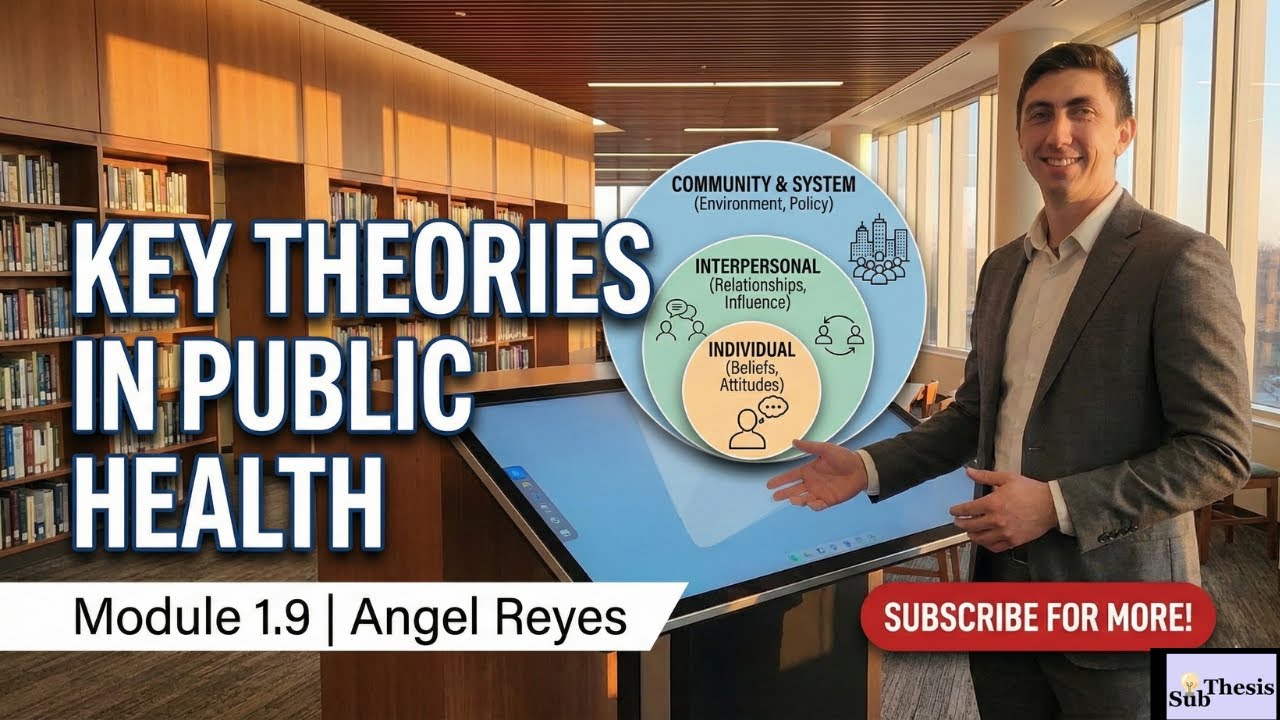
At the broadest level, community and systems theories address the structural, organizational, and environmental factors that shape population health. The Socio-Ecological Model is perhaps the most widely recognized framework in this category. It depicts health behavior as the product of nested influences ranging from individual characteristics through interpersonal relationships, organizational settings, community norms, and public policy.
The PRECEDE-PROCEED Model offers a comprehensive planning framework for designing and evaluating community health programs. PRECEDE guides the diagnostic phase, identifying predisposing, reinforcing, and enabling factors that influence health behavior. PROCEED guides implementation and evaluation, providing a structured pathway from program launch through outcome assessment.
These broad frameworks are essential for public health professionals who must address health disparities, design population-level programs, and advocate for policy changes. They reveal that individual behavior change is often insufficient if the surrounding systems—healthcare access, built environment, economic conditions, regulatory structures—remain unchanged. Effective public health research and practice require attention to all levels simultaneously.
Integrating Multiple Levels for Comprehensive Interventions
The most effective public health interventions operate across multiple levels simultaneously. A comprehensive smoking cessation program, for instance, might combine individual counseling informed by the Theory of Planned Behavior with peer support groups grounded in Social Cognitive Theory and policy advocacy guided by the Socio-Ecological Model. Each component targets a different layer of influence, creating reinforcing effects.
Multi-level intervention design requires researchers to think beyond their disciplinary comfort zones. A psychologist might naturally gravitate toward individual-level theories, while a sociologist might focus on community structures. Effective public health research draws on both perspectives, recognizing that lasting behavior change requires alignment between personal motivation and environmental support.
When selecting theories for multi-level research, ensure that the theoretical frameworks you choose are compatible in their assumptions and complementary in their scope. Map each theory to the specific level of influence it addresses and articulate how the levels interact. This systematic approach produces intervention designs that are both theoretically grounded and practically comprehensive.
Related topics from other weeks:
Frequently Asked Questions
What is the difference between the Health Belief Model and the Theory of Planned Behavior?
The Health Belief Model focuses on perceived threat and cost-benefit analysis of health actions. The Theory of Planned Behavior emphasizes attitudes, subjective norms, and perceived behavioral control as determinants of behavioral intention. Both operate at the individual level but highlight different psychological mechanisms.
How does the Socio-Ecological Model differ from individual-level theories?
The Socio-Ecological Model recognizes that health behavior is shaped by multiple nested levels of influence, from individual factors through policy and societal structures. Individual-level theories focus exclusively on personal cognitive and motivational processes, missing the broader contextual factors that the ecological model captures.
What does PRECEDE-PROCEED stand for?
PRECEDE stands for Predisposing, Reinforcing, and Enabling Constructs in Educational Diagnosis and Evaluation. PROCEED stands for Policy, Regulatory, and Organizational Constructs in Educational and Environmental Development. Together, they form a comprehensive planning and evaluation framework for health promotion programs.
Why is Social Network Theory relevant to public health?
Social Network Theory reveals how the structure and quality of social relationships influence health behaviors and outcomes. Research shows that health behaviors spread through networks, that social isolation is a risk factor for mortality, and that network-based interventions can amplify the reach of health promotion efforts.
Can I apply these theories outside of public health settings?
Absolutely. While these theories are commonly taught in public health curricula, their constructs apply broadly across healthcare settings. Hospital-based health educators, clinical nurse specialists, and rehabilitation professionals all benefit from understanding how individual, interpersonal, and systemic factors influence patient behavior.
Explore more study tools and resources at subthesis.com.