Understanding Your Audience
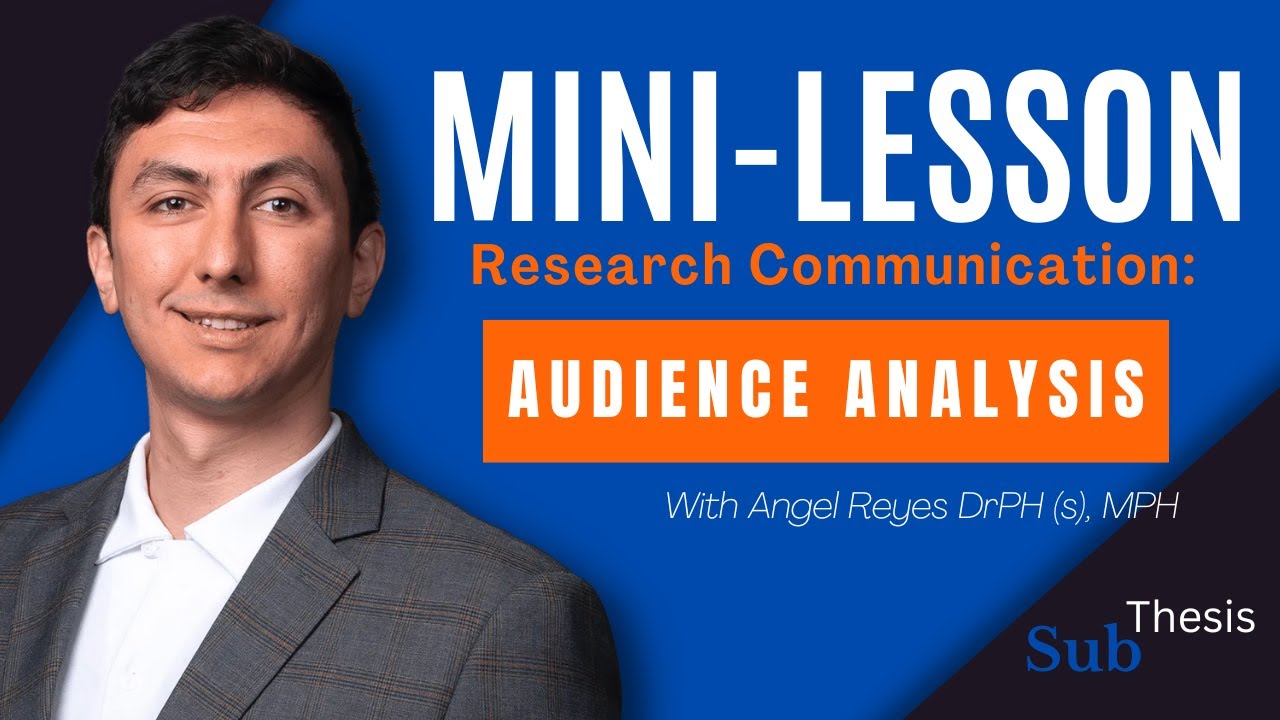
The Role of Audience Analysis in Shaping Your Message
Audience analysis is the process of systematically evaluating who will receive your research communication and what they need from it. In healthcare research, the potential audience is remarkably diverse, spanning clinical practitioners, hospital administrators, insurance companies, government regulators, patient advocacy groups, and the general public. Each of these groups approaches health information with different levels of prior knowledge, different professional concerns, and different motivations for engagement.
Without a clear understanding of your audience, even the most compelling research findings can fall flat. A message crafted for epidemiologists will likely confuse a community health worker, while a patient-facing summary may lack the technical depth that a journal reviewer expects. Audience analysis ensures that the right information reaches the right people in the right format, maximizing both comprehension and impact.
The process begins with asking fundamental questions: Who needs to know about this research? What do they already understand about the topic? What decisions or actions could this information influence? What barriers might prevent them from engaging with the content? Answering these questions creates a profile that guides every subsequent communication decision, from vocabulary and tone to channel selection and visual design.
Segmenting Healthcare Stakeholders
Effective audience analysis requires segmenting stakeholders into meaningful groups based on shared characteristics. In healthcare, common segmentation categories include clinical professionals, administrative and policy stakeholders, academic peers, patients and caregivers, and media representatives. Each group has distinct information needs and preferred communication channels that must be accounted for in any dissemination strategy.
Clinical professionals, for example, typically value concise summaries that highlight practice implications. They want to know how findings affect patient care protocols and whether the evidence is strong enough to justify changing established procedures. Administrative stakeholders, on the other hand, may be more interested in cost-effectiveness data, implementation feasibility, and organizational impact. Recognizing these differences allows researchers to emphasize the most relevant aspects of their work for each group.
Patients and caregivers represent a particularly important and often underserved audience. They bring personal stakes and emotional investment to health information, and they may lack the scientific literacy to interpret technical findings independently. Communicating with this group requires special attention to empathy, clarity, and cultural sensitivity. Segmentation is not about creating rigid boundaries but about developing flexible communication strategies that honor the unique perspective each group brings to the conversation.
Adapting Language and Framing for Maximum Impact
Once an audience has been identified and segmented, the next step is adapting the language and framing of the research message accordingly. Language adaptation goes beyond simply replacing technical terms with simpler words. It involves restructuring the entire narrative to align with the audience's frame of reference, priorities, and decision-making processes. A finding about reduced hospital readmission rates might be framed as a quality improvement story for administrators, a patient safety advance for clinicians, or a source of reassurance for families.
Framing also involves choosing which aspects of the research to emphasize. For a policy audience, the population-level implications and economic arguments may be most persuasive. For a clinical audience, the effect sizes, confidence intervals, and comparison to existing treatments carry the most weight. For the general public, personal stories and relatable outcomes often create stronger connections than abstract statistics.
It is important to note that adapting a message does not mean manipulating or distorting the findings. Ethical communication requires that all versions of the message remain faithful to the evidence. The adaptation lies in emphasis, context, and presentation rather than in selective reporting or exaggeration. Skilled communicators learn to highlight different facets of the same diamond depending on who is looking at it, without ever changing its fundamental shape.
Practical Tools for Conducting Audience Analysis
Several practical tools and frameworks can help researchers conduct audience analysis systematically. One widely used approach is the creation of audience personas, which are fictional but realistic profiles representing key audience segments. A persona might describe a busy rural nurse practitioner with limited internet access and ten years of clinical experience, or a newly diagnosed patient navigating treatment options for the first time. These personas ground communication decisions in human reality rather than abstract categories.
Surveys and focus groups offer another valuable method for understanding audience needs. Before launching a major communication campaign, researchers can gather direct feedback from representatives of their target audience to test assumptions about knowledge levels, preferred formats, and key concerns. This formative research prevents costly misalignments between message and audience.
Environmental scanning is also useful, particularly when communicating through media channels. By monitoring how similar topics are currently being discussed in news outlets, social media, and professional forums, researchers can identify existing narratives, misconceptions, and information gaps that their communication should address. Combining persona development, direct audience feedback, and environmental scanning creates a robust foundation for communication strategies that truly connect with their intended recipients and drive the desired outcomes.
Frequently Asked Questions
How do I determine the right level of technical detail for a specific audience?
Start by assessing the audience's baseline knowledge of the subject matter. For clinical professionals, you can generally assume familiarity with medical terminology and basic research concepts. For the general public, assume no prior scientific training. When in doubt, pilot-test your communication with a small sample of your intended audience and adjust based on their feedback. The goal is to provide enough detail to be credible and useful without overwhelming the reader.
What happens when a single communication must reach multiple audience segments?
When addressing multiple audiences simultaneously, use a layered approach. Lead with a clear, jargon-free summary that anyone can understand, then provide progressively more detailed sections for readers who want deeper information. Executive summaries, supplementary appendices, and hyperlinked resources allow different audience members to engage at their preferred level of depth without forcing everyone through the same content.
Why are audience personas useful in research communication?
Audience personas transform abstract demographic data into relatable human profiles, making it easier to empathize with your audience during the communication design process. By imagining a specific person with defined needs, constraints, and motivations, researchers can make more intuitive decisions about tone, format, and content. Personas also help teams align around a shared understanding of who they are communicating with, reducing inconsistencies in messaging.
How does cultural background influence audience analysis in healthcare?
Cultural background shapes how individuals interpret health information, what sources they trust, and how they make health-related decisions. Language preferences, health beliefs, attitudes toward authority, and communication norms all vary across cultural groups. Effective audience analysis accounts for these differences by incorporating cultural competence principles, seeking input from community representatives, and avoiding assumptions based on a single cultural perspective.
Can audience analysis help reduce health disparities?
Absolutely. Health disparities are often exacerbated by communication that fails to reach or resonate with marginalized communities. By conducting thorough audience analysis, researchers can identify groups that are typically excluded from information channels and design targeted communication strategies to reach them. This might involve translating materials into multiple languages, using trusted community messengers, or choosing distribution channels that align with the media habits of underserved populations.
Explore more study tools and resources at subthesis.com.