Master Evidence-Based Practice in Healthcare
Why Evidence-Based Practice Is Non-Negotiable in Modern Healthcare
Healthcare professionals today operate in an environment where clinical decisions must be grounded in the best available evidence. Gone are the days when tradition or intuition alone could justify a treatment plan. Evidence-based practice (EBP) integrates clinical expertise, patient preferences, and current research findings to deliver optimal care outcomes.
For nursing students and allied health professionals, developing EBP competencies is not merely an academic exercise. Licensing bodies, accreditation organizations, and employers increasingly expect practitioners to locate, appraise, and apply research findings in daily practice. A solid grasp of research methodology empowers you to distinguish high-quality studies from flawed ones, advocate for patients with data-driven arguments, and contribute to the advancement of your discipline.
This course positions research literacy as a core professional skill rather than an abstract scholarly pursuit. By the end of the eight weeks, you will possess a practical toolkit for reading, evaluating, and designing research that addresses real clinical questions in your own practice setting.
Course Structure and Learning Pathway
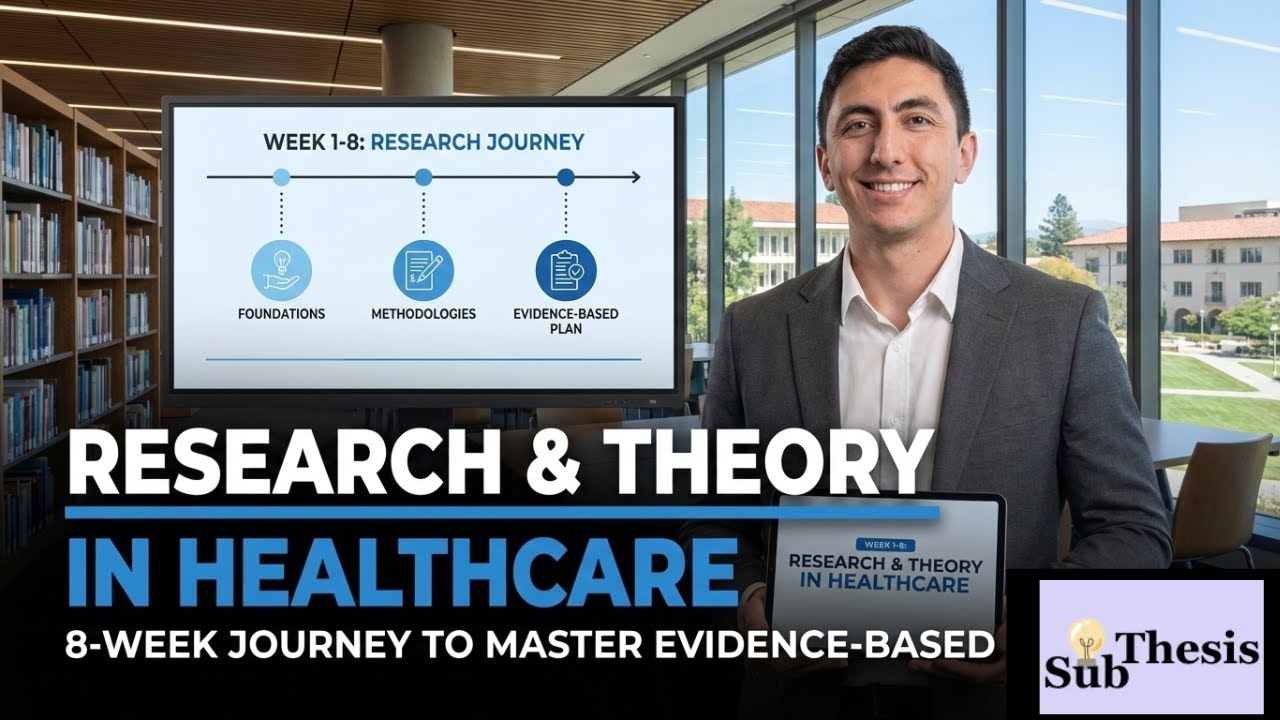
The curriculum unfolds across eight themed weeks, each building upon the previous one. Week 1 lays philosophical and theoretical groundwork, while subsequent weeks introduce ethics, literature searching, quantitative and qualitative methods, and ultimately a capstone research plan. This scaffolded approach ensures that complex topics become accessible through incremental skill development.
Each week features micro-lectures designed for flexible, self-paced consumption. These short video segments break dense material into digestible portions so you can revisit challenging concepts without rewatching lengthy recordings. Accompanying each lecture are skill-building activities that move knowledge from passive reception to active application.
Reflective writing assignments serve as checkpoints throughout the course. They encourage you to connect abstract research principles to your own professional context, fostering deeper retention and personal relevance. This blend of theory, application, and reflection mirrors the iterative nature of research itself.
Building Critical Analysis Skills
One of the most valuable outcomes of this course is the ability to critically appraise published healthcare literature. Critical analysis goes beyond simply reading an article; it involves systematically evaluating the study design, sample characteristics, data collection methods, analytical techniques, and the authors' interpretation of results.
Students often enter research courses feeling intimidated by statistical jargon and complex methodologies. This program demystifies those elements by introducing terminology gradually and pairing definitions with healthcare-specific examples. You will learn to ask targeted questions when reading a study: Was the sample size adequate? Were confounding variables controlled? Do the conclusions logically follow from the data presented?
These analytical habits become second nature with practice and will serve you well beyond the classroom. Whether you are evaluating a new clinical guideline, reviewing a colleague's quality improvement proposal, or preparing for graduate study, critical appraisal skills form the backbone of informed professional judgment.
Connecting Theory to Your Practice Area
A distinguishing feature of this course is its emphasis on bridging the gap between theoretical knowledge and clinical reality. Research methodology can feel detached from bedside care or community health work if it remains purely academic. This program deliberately asks you to anchor every concept in your own professional experience.
Whether you work in acute care, public health, mental health, or rehabilitation, the research principles covered here apply universally. The difference lies in how you contextualize them. A critical care nurse might focus on randomized controlled trials evaluating ventilator protocols, while a community health educator might gravitate toward qualitative studies exploring patient perceptions of wellness programs.
By the conclusion of the course, you will have drafted a personalized evidence-based research plan tailored to a question relevant to your practice. This deliverable transforms abstract learning into a tangible product you can refine and potentially pursue in your professional or academic career.
Frequently Asked Questions
Do I need prior research experience to succeed in this course?
No prior research experience is required. The course is designed to build foundational knowledge from the ground up, introducing concepts incrementally so that beginners can follow along confidently. Students with some background will find the material deepens and formalizes their existing understanding.
How much time should I expect to spend each week?
Plan for approximately four to six hours per week, which includes watching micro-lectures, completing skill-building activities, and writing reflective assignments. The self-paced format allows you to distribute this time across the week in whatever pattern suits your schedule.
What is the difference between evidence-based practice and research?
Research is the systematic process of generating new knowledge through structured investigation. Evidence-based practice is the application of that research knowledge, combined with clinical expertise and patient values, to inform healthcare decisions. This course teaches you to do both.
Will this course prepare me for graduate-level research?
Yes, the competencies developed here align with foundational expectations for master's and doctoral programs in healthcare disciplines. You will gain familiarity with paradigms, terminology, and critical appraisal methods that are prerequisites for advanced research coursework.
What is the purpose of the reflective writing assignments?
Reflective assignments help you internalize abstract concepts by connecting them to your professional experiences and goals. They encourage metacognition, which strengthens retention and helps you identify areas where you need additional study or clarification.
Explore more study tools and resources at subthesis.com.