What is an IRB? Institutional Review Board Process Explained
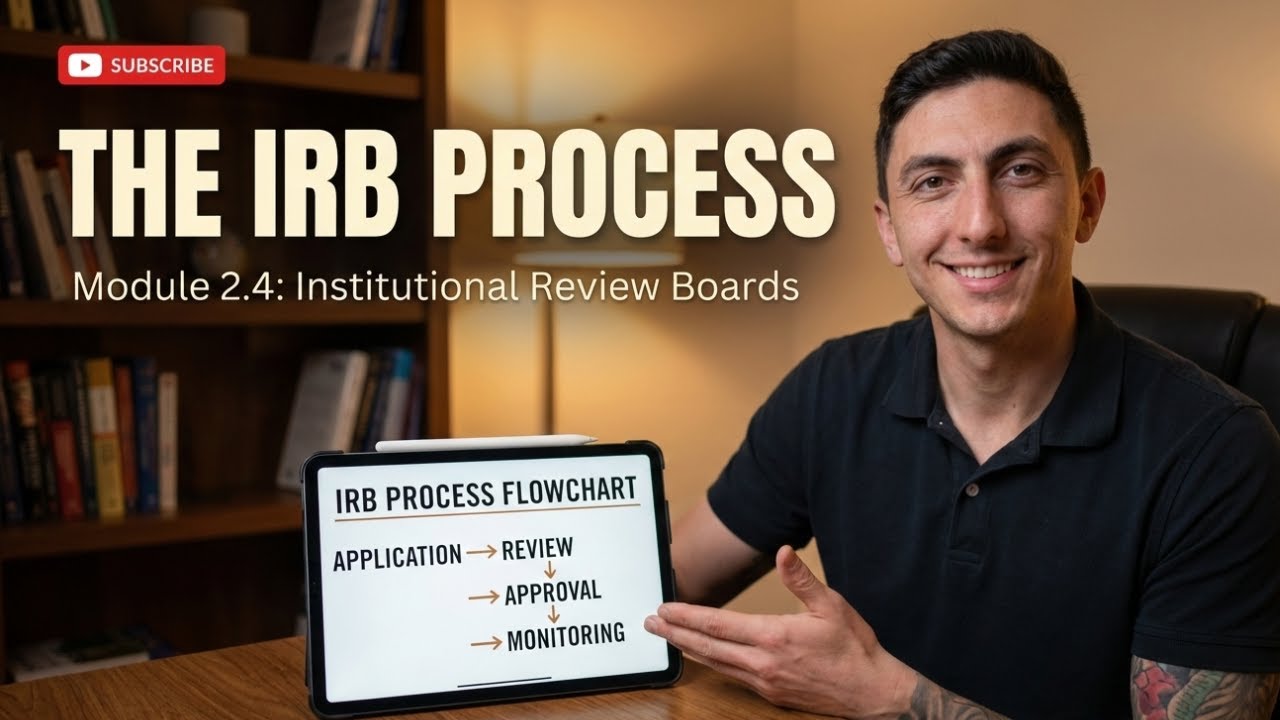
The Purpose and Composition of an Institutional Review Board
An Institutional Review Board is a committee formally designated to review, approve, and monitor research involving human subjects. Its primary mandate is to protect the rights and welfare of participants by ensuring that proposed studies comply with federal regulations, institutional policies, and established ethical principles. No federally funded research on human subjects may proceed without IRB approval.
IRB membership is intentionally diverse to prevent insular decision-making. Federal regulations require at least five members with varying backgrounds, including at least one scientist, one non-scientist, and one member unaffiliated with the institution. This composition ensures that protocols are evaluated from multiple perspectives, including scientific merit, community values, and practical feasibility.
The board's authority extends beyond initial approval. IRBs conduct continuing reviews of ongoing studies, evaluate proposed amendments, and investigate reports of adverse events or protocol deviations. If a study is found to be operating outside its approved parameters, the IRB has the power to suspend or terminate it. This ongoing oversight distinguishes the IRB from a simple approval stamp and positions it as an active partner in ethical research conduct.
Understanding the Three Levels of IRB Review
Exempt review applies to research that poses minimal risk and falls into specific categories defined by federal regulation. Common examples include surveys of adults on non-sensitive topics, observation of public behavior, and analysis of existing de-identified data. Despite the name, exempt studies still require IRB determination; the researcher cannot self-certify exemption.
Expedited review is available for studies that involve no more than minimal risk and fit within categories published by the Office for Human Research Protections. A single IRB member or a small subcommittee can approve these protocols without convening the full board. Expedited review is frequently used for research involving routine clinical procedures like blood draws or non-invasive data collection.
Full board review is reserved for studies that exceed minimal risk or involve vulnerable populations requiring additional protections. The entire IRB convenes to discuss the protocol, and approval requires a majority vote of the members present. Studies involving experimental drugs, surgical interventions, or sensitive topics such as substance use or criminal behavior typically undergo full board review. Understanding which category applies to your study saves time and helps set realistic planning timelines.
Key Functions: Ethics Evaluation, Risk Assessment, and Compliance Monitoring
The ethics evaluation component examines whether the study design respects participant autonomy, ensures equitable selection, and provides adequate informed consent procedures. Reviewers scrutinize consent forms for readability, completeness, and the absence of exculpatory language that would ask participants to waive their legal rights. They also assess whether recruitment methods are free from coercion or undue influence.
Risk assessment involves cataloging all foreseeable physical, psychological, social, and economic risks, then comparing them to the anticipated benefits. The IRB evaluates whether risks have been minimized through sound study design and whether remaining risks are reasonable relative to the expected knowledge gain. If the board determines that risks outweigh benefits, the protocol will not receive approval regardless of its scientific significance.
Compliance monitoring ensures that approved studies continue to operate within their authorized parameters. Researchers must report any unanticipated problems, adverse events, or deviations from the protocol. The IRB uses this information to decide whether modifications are needed, whether participants should be notified, or whether the study should be paused. This feedback loop maintains accountability throughout the research lifecycle.
Building a Strong IRB Application: What Reviewers Want to See
A well-prepared IRB application begins with a clear, jargon-free description of the study purpose, methods, and participant population. Reviewers are not necessarily experts in your specific field, so the application must be accessible to an educated non-specialist. Ambiguity or excessive technical language can delay approval because it prevents the board from accurately assessing risk.
The informed consent document is often the most scrutinized component of the application. It must describe the study in language a participant can readily understand, typically at an eighth-grade reading level. All risks, benefits, alternatives, and confidentiality measures should be stated explicitly. Including a section on the participant's right to withdraw without consequence is essential and frequently verified by reviewers.
Supporting materials round out a complete application. These may include recruitment flyers, survey instruments, interview guides, data management plans, and certificates of research ethics training such as CITI certification. Providing these materials upfront reduces the likelihood of requests for additional information, which can add weeks to the review timeline. Students submitting their first IRB application should consult their institution's templates and seek feedback from mentors before submission.
Frequently Asked Questions
Can a researcher begin data collection before receiving IRB approval?
No. Federal regulations require that IRB approval be obtained before any interaction with participants or collection of identifiable data. Beginning research without approval constitutes a serious regulatory violation that can result in sanctions and invalidation of collected data.
What does it mean when a study is classified as exempt?
Exempt status means the study falls into federally defined categories of minimal-risk research and does not require ongoing IRB oversight. However, the IRB itself must make this determination; researchers cannot declare their own studies exempt.
How long does the IRB review process typically take?
Timelines vary by institution and review type. Exempt reviews may take a few days to two weeks, expedited reviews often require two to four weeks, and full board reviews can take a month or longer depending on meeting schedules and whether revisions are needed.
What happens if the IRB requests modifications to a protocol?
The researcher must address each concern raised by the board and submit a revised application. The revisions are reviewed to confirm they adequately resolve the issues. Only after the IRB confirms that all conditions are met will formal approval be granted.
Do class projects and quality improvement initiatives require IRB review?
It depends on whether the activity meets the federal definition of research, which involves a systematic investigation designed to contribute to generalizable knowledge. Many class projects and QI initiatives do not meet this threshold, but the IRB should be consulted to make that determination.
Explore more study tools and resources at subthesis.com.